Feerie: What Actually Happens in the Moulin Rouge Show
See prices From 142 EUR · Free cancellation available
Contents
Moulin rouge feerie is the name of the revue currently running at the Moulin Rouge, a two-hour cabaret show performed without an interval by a troupe of around 60 artists. It is built from a sequence of themed acts rather than a single storyline, moving through costume, music and acrobatics before closing with the famous French Cancan.
I think the name itself trips people up more than it should. Feerie simply means the show, the one ticket to the Moulin Rouge buys you, not a separate add-on or a different experience. Let me walk through what is actually inside those two hours, drawing only on what is publicly documented about the production, and tell you honestly who it suits.
What Does “Feerie” Actually Mean?
Feerie is a French word roughly translating to “a fairytale spectacle,” and it is the title of the revue that has run at the Moulin Rouge for years, built around lavish costuming and large-scale staging rather than a single narrative plot. When you book a Moulin Rouge ticket, this is the show you are seeing.
My honest take: I would not go in expecting a traditional plot with a beginning, middle and end. This is a revue, a sequence of distinct acts strung together by theme and spectacle, closer in structure to a variety show than a book musical. Once you reset that expectation, the show tends to land much better. My running time guide covers exactly how the two hours are paced if timing matters to your evening.
Check prices & dates
Ready to visit?
Book your tickets in advance: popular time slots sell out.
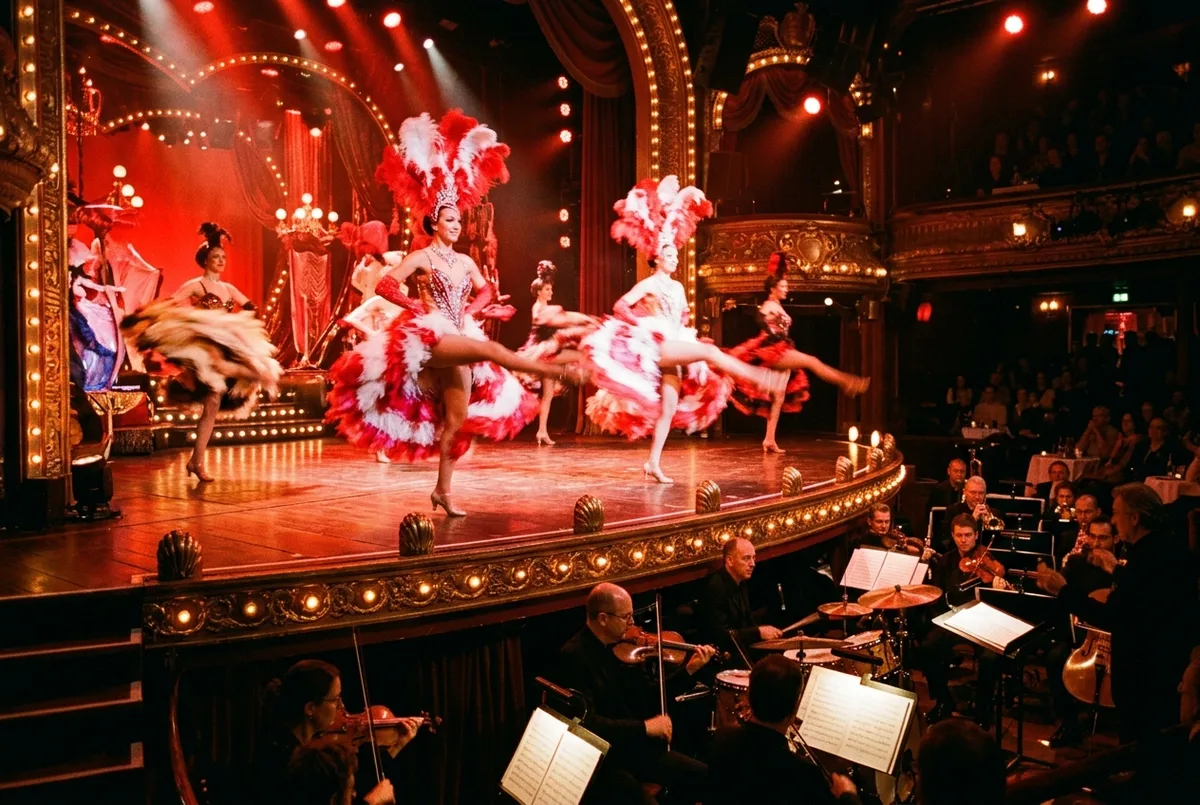
Publicly available descriptions of the production point to a mix of large ensemble dance numbers, costume changes built around elaborate feather and rhinestone designs, acrobatic and circus-style acts, and live orchestral music performed throughout, all building toward the signature French Cancan finale that the venue has been associated with since the 19th century.
I would describe the overall feel as maximalist rather than subtle: big staging, bold lighting, and a pace that rarely slows down for two hours straight. That is a deliberate choice for a show built to read clearly from a room full of tiered cabaret tables rather than a single straight-on viewing angle, which I cover in more depth in my seating chart guide.
Is This a Burlesque Show, a Cabaret Show, or Both?
Both terms apply, and I would not overthink the distinction. Cabaret describes the venue format and tradition, a live variety performance with dining or drinks built in, while burlesque describes a style of theatrical, often risque entertainment that overlaps with parts of the production. The Moulin Rouge sits squarely inside both traditions rather than being a strict example of one or the other.
My broader cabaret-genre explainer goes deeper into where cancan, burlesque and revue traditions overlap if you want the fuller picture before choosing a show, since the Moulin Rouge is far from the only Paris venue working in this space.
I would use that distinction mainly to set expectations rather than to pick a venue. If what you actually want is a smaller, more intimate adult revue, a different Paris cabaret might suit you better than a show built for a large, tourist-friendly audience. If you want the biggest, most recognizable version of this tradition in the city, the Moulin Rouge is the one most people mean when they say “Paris cabaret” in the first place.
Is the Show Suitable for Everyone?
Mostly, with one clear exception. The venue does not recommend the show for children under six, largely due to the length and the late hour of the second nightly showing, and some of the costuming and tone leans adult in style even though nothing in the production is explicit in the way a strict burlesque club might be.
I would treat this as a show built for adults and older teens rather than young families, not because of graphic content but because of pacing, length and the late finish on the second slot. My dress code guide covers the practical side of attending, including the minimum age guidance in more detail.
How Long Has This Kind of Show Been Running Here?
The Moulin Rouge itself opened in 1889, and the venue has built its reputation around large-scale cabaret revues and the French Cancan ever since, long before Feerie was the specific production name. The show you see today is the latest in a long line of revues the venue has staged, each refreshed over time while keeping the same core ingredients: spectacle, costume and the Cancan finale.
I think that history is worth knowing going in, mainly because it reframes what you are watching. This is not a one-off tourist spectacle assembled for visitors; it is the current version of a performance tradition the venue has been refining and rebuilding for well over a century. Knowing that context made me take the show itself more seriously as a production, rather than viewing it purely as a box to check on a Paris itinerary. The venue’s own site, moulinrouge.fr, covers more of that background if the history interests you beyond this page.
Does the Live Orchestra Play the Whole Show?
Live musical accompaniment runs throughout the production rather than being used for only a handful of numbers, which is a detail I think gets lost in how most people picture a cabaret show. It gives the performance a fuller, more theatrical sound than recorded backing tracks would.
I would call this one of the more underrated reasons the show holds up: a live orchestra changes the texture of big ensemble numbers in a way a backing track simply cannot replicate, and it is part of what separates a long-running institution like this from a smaller tourist-trap cabaret act.
Does Every Ticket Tier See the Same Feerie Show?
Yes. Every Moulin Rouge ticket on this site, from the standard show-and-champagne ticket through the dinner and combo options, includes the identical Feerie performance. What changes between tiers is everything surrounding the show itself, not the production.
I would not pay more expecting a different or expanded version of the show; that spend is going toward a meal, transport, or a bundled sightseeing tour instead, which my dinner show guide breaks down if you are deciding between tiers.
Is Feerie Worth Seeing if You’ve Already Seen Another Cabaret?
That depends on which one, and I would not assume they are interchangeable. My is it worth it breakdown tackles that question honestly, including the “is it touristy” objection that comes up a lot with a show this famous.
I would still rank Feerie as the most recognizable version of this genre in Paris, purely on name recognition and production scale, even if you have already seen a smaller cabaret elsewhere in the city. The scale of the staging, the size of the cast, and the live orchestra are genuinely hard to match outside this venue specifically.
How Many Costume Changes Should You Expect?
Publicly available descriptions of the production point to a large wardrobe used across the evening, with performers changing costume repeatedly between acts rather than wearing one outfit throughout. Feathers, rhinestones and elaborate headpieces are the recurring visual language across most of the segments.
I would call the costuming one of the most photographed aspects of the show for a reason, even though cameras are not allowed once the performance starts. The scale of it, dozens of performers in coordinated, elaborate outfits across a two-hour show, is genuinely hard to picture secondhand, which is part of why I think the production is worth seeing rather than just reading about.
My Honest Recommendation
Go in expecting a revue, not a plot, and a maximalist two hours of costume, music and acrobatics building to the Cancan rather than a subtle slow build. If the late-night second showtime and the lack of a strict storyline don’t bother you, I think the production comfortably earns its reputation. For everything else worth knowing before you book, from dress code to seating, my Moulin Rouge show guide rounds up the rest of the practical details in one place.
What does “Feerie” mean at the Moulin Rouge?
It is the title of the current revue, a French word for a fairytale-style spectacle, built from themed acts rather than a single storyline.
How long does the Feerie show run?
About two hours, performed without an interval, from the opening number through to the French Cancan finale.
Is the Moulin Rouge show the same as a burlesque show?
It overlaps with burlesque style and the broader cabaret tradition, without being a strict example of either term on its own.
Is Feerie suitable for children?
It is not recommended for children under six, mainly because of the show’s length and the late hour of the second nightly performance.
Does every ticket tier see a different version of the show?
No, every Moulin Rouge ticket includes the same Feerie performance. Pricier tiers add a meal, transport or a tour, not a different show.