Montmartre Travel Guide: Tours, Food and Top Attractions
See prices From 142 EUR · Free cancellation available
Contents
Montmartre tour planning means walking one of the few Paris neighborhoods that still feels like a village sitting on top of a hill, home to Sacre-Coeur, a historic artist quarter and, at the bottom of the hill after dark, the Moulin Rouge itself. My honest take right away: this is a half-day neighborhood, not a quick photo stop, and I would build a loose plan around it rather than wander in blind, especially if you are also fitting an evening cabaret show into the same day.
I am going to cover what the neighborhood is actually known for, how to tour it on foot, where to eat, what historic sites are worth your time, and the top attractions beyond Sacre-Coeur, before landing on how this all fits together with an evening at the Moulin Rouge. Since every ticket this site tracks belongs to one venue sitting right at the foot of this hill, it is worth checking how long each of the seven Moulin Rouge evenings actually runs before you lock in your Montmartre day plan around it.
What Is Montmartre Known For?
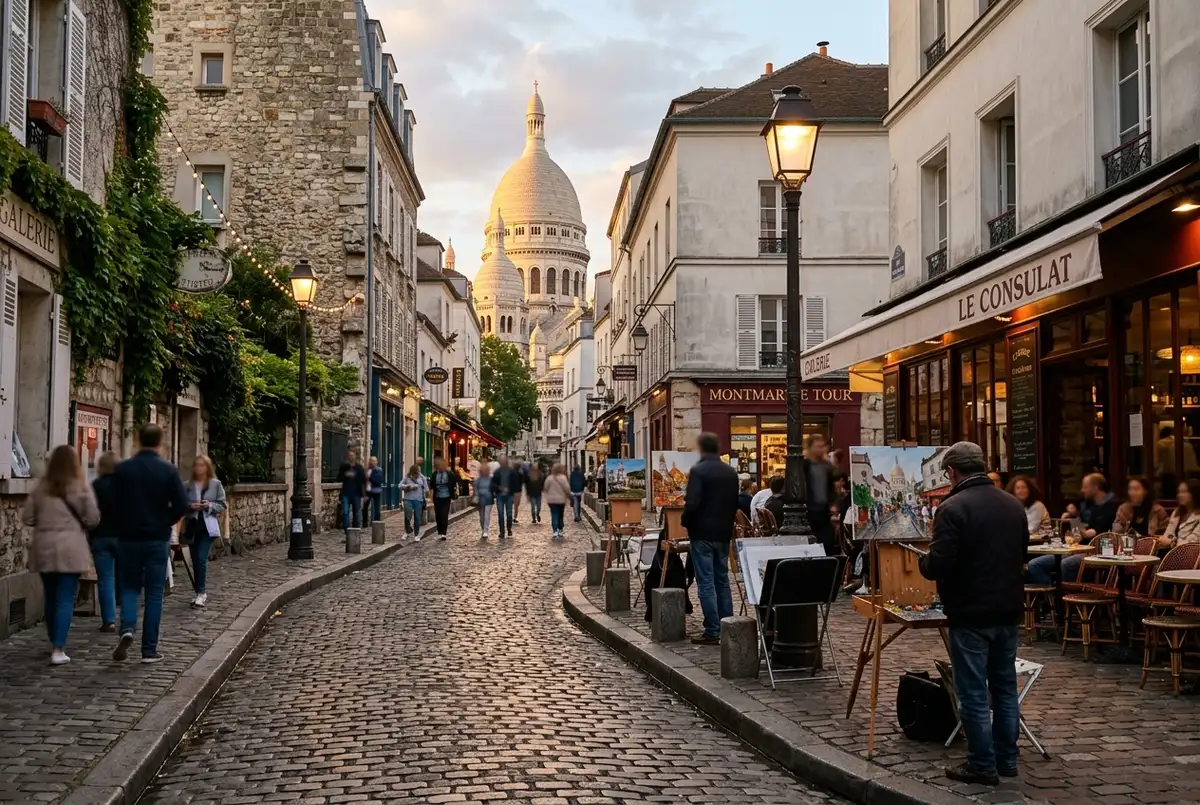
Montmartre is the hilltop neighborhood in Paris’s 18th arrondissement, famous for Sacre-Coeur’s white basilica dome, a bohemian artist history that drew Picasso, Renoir and Toulouse-Lautrec, and a genuinely different pace from the rest of central Paris thanks to its steep, cobbled streets and village-like layout. It is also where the Moulin Rouge itself sits, right at the foot of the hill in Place Blanche, which makes the neighborhood a natural daytime companion to an evening cabaret show.
My honest read on Montmartre is that it earns its reputation on atmosphere as much as any single sight. The view from Sacre-Coeur is genuinely worth the climb, but I would not treat this as a checklist neighborhood where you tick off the basilica and leave. The streets below it, the quieter corners away from Place du Tertre, and the general feel of walking a hill that still looks like a 19th-century village are a big part of why people come back. The Wikipedia entry on Montmartre is a solid starting point if you want the fuller history behind the hill before you go.
Check prices & dates
Ready to visit?
Book your tickets in advance: popular time slots sell out.
Yes, and I would not hesitate on this one. It combines a genuine landmark in Sacre-Coeur, real cultural history, good food, and proximity to the Moulin Rouge into one compact, walkable area, which is a rare combination in a city as spread out as Paris. The honest caveats are real too: it gets crowded around the basilica and Place du Tertre, especially midday, and like most heavily touristed areas, it has its share of petty theft and persistent street sellers to stay aware of.
I would not let those caveats talk you out of it. A little awareness goes a long way, and the neighborhood’s actual safety profile is closer to “normal big-city caution” than anything that should keep you away. My is Montmartre worth visiting guide goes deeper into safety, timing and the “is it touristy” question if that is still on your mind.
How Do You Tour Montmartre?
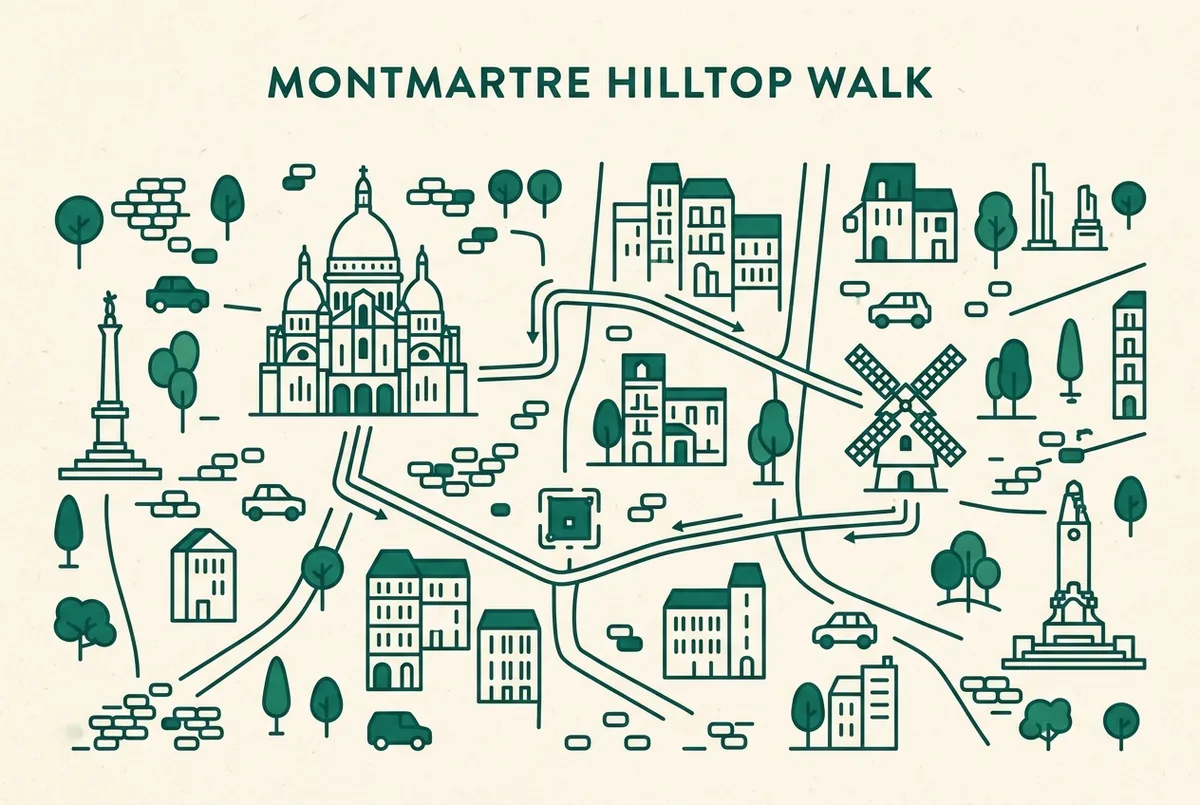
You have two honest options: a free self-guided walk using a rough route of your own, or a small-group guided walking tour that handles the route and the history for you. I would pick based on how much you actually want a guide filling in context as you walk versus wandering at your own pace with a map open on your phone.
My honest recommendation leans guided for a first visit specifically because Montmartre’s history rewards context you would otherwise have to look up yourself, stop by stop. A self-guided walk still works well if you have done some reading beforehand or simply prefer exploring without a schedule. My Montmartre walking tour guide compares both approaches in detail, including a realistic route order that ends near the Moulin Rouge as evening sets in.
What’s the Best Way to Experience Montmartre’s Food Scene?
Montmartre’s food scene runs from classic Parisian bistros to crepe stands and chocolate shops tucked into its steep side streets, and I would treat eating here as part of the exploring, not a separate errand. A guided food tour bundles several tastings into one organized stop, while eating on your own gives you more control over pace and what you actually want to try.
My honest take: a food tour earns its price mainly through curation, pointing you to spots you would likely walk past on your own. If you already know you want to linger at one cafe rather than sample five quick stops, I would skip the tour and just wander with an appetite instead. My Montmartre food tour guide compares the scraped tour options against going it alone.
What Historic Sites Should You See in Montmartre?
Beyond Sacre-Coeur, the neighborhood’s artist history is its real draw, and the Lapin Agile is the clearest surviving piece of it: a small, still-operating chansonnier cabaret that counted Picasso among its regulars in the early 1900s, distinct from the ticketed revue cabarets like the Moulin Rouge. I would treat it as a free-to-view-from-outside historic stop on a walking route rather than a venue you necessarily book.
I think this is the part of Montmartre most first-time visitors skip entirely, and I would not make that mistake. Place du Tertre gets the crowds for its working artists today, but the Lapin Agile is where the neighborhood’s actual bohemian reputation was built. My Lapin Agile and Montmartre’s cabaret history guide covers the fuller story.
What Are the Top Montmartre Attractions?
Sacre-Coeur anchors the list, but the neighborhood has real depth beyond the basilica: Place du Tertre’s working artist square, Montmartre’s small hilltop vineyard, the Moulin Rouge’s famous exterior at the bottom of the hill, and the Lapin Agile a short walk away. I would plan a loose route that hits most of these rather than treating any single one as the whole visit.
My honest advice is to pace this across a half day rather than rush it into an hour. Every one of these sights rewards a few minutes of actually standing still in it, not just a photo and a walk-on. My Montmartre tourist attractions guide ranks the full list with a line on each one and where to find it.
How Do You Get to Montmartre and the Moulin Rouge?
Montmartre sits in the 18th arrondissement, served by its own metro stops, with the Moulin Rouge specifically at Place Blanche, practically at the exit of the Blanche metro station on line 2. I would plan your daytime Montmartre route to end somewhere near there, since it sets you up naturally for an evening show without a second cross-town trip.
I would not treat the walk up to Sacre-Coeur and the evening at the Moulin Rouge as two unrelated plans on the same day. They sit close enough together that a single, well-ordered day plan handles both comfortably. My getting to the Moulin Rouge guide covers the exact metro stop, the venue’s address, and which nearby hotel areas suit an evening show if you are deciding where to stay.
If you are staying somewhere outside Montmartre for the rest of your trip, I would still base an evening here specifically around the Moulin Rouge rather than treat it as a detour, since the metro connection back to most central Paris neighborhoods is straightforward even after a late finish.
When Should You Visit Montmartre?
Morning is my honest preference, specifically to beat the crowds at Sacre-Coeur and Place du Tertre before tour groups fill both. Late afternoon into early evening is my second choice, mainly because the light on the hilltop streets turns genuinely beautiful as the day winds down, right before you would head to a Moulin Rouge show.
I would actively avoid the midday stretch if you can help it. It is when both the basilica steps and the artist square are at their most crowded, and the photos and the atmosphere both suffer for it. If your evening is already booked for the Moulin Rouge, I would front-load Montmartre earlier in the day rather than try to rush both into a short afternoon.
What Practical Tips Should First-Time Visitors Know?
A few practical things make a real difference on the ground. The hill is genuinely steep in parts, so I would wear comfortable shoes rather than anything you would not want to climb cobblestones in, and the funicular up to Sacre-Coeur is a legitimate shortcut if you would rather save your legs for the rest of the day. Crowds build fast around the basilica steps and Place du Tertre, especially once tour buses arrive midmorning, so arriving earlier genuinely pays off.
My honest warning on the one scam worth knowing about: be wary of strangers near the basilica steps offering to tie a “friendship bracelet” onto your wrist, since it is a well-known setup for an aggressive demand for payment afterward. A polite but firm “no thank you” and keeping walking is the easiest way through it. Beyond that, I would apply the same general-city caution here that you would anywhere else busy with tourists: keep bags zipped and in front of you, and stay aware in denser crowds.
Is Montmartre Good for Families and First-Time Paris Visitors?
For families, I think Montmartre works well, mainly because Sacre-Coeur, the funicular ride and the artist square at Place du Tertre give kids a genuine sense of discovery rather than just another museum queue. The steep streets are the real planning factor; I would build in rest stops and not assume younger legs will match an adult’s pace up the hill.
For first-time Paris visitors generally, I would put Montmartre near the top of a first-trip itinerary, not save it for a return visit. It delivers a different, more intimate side of Paris than the Eiffel Tower or the Louvre, and pairing it with an evening Moulin Rouge show gives a first-timer a genuinely well-rounded day without overcomplicating the logistics.
Should You Pair a Montmartre Day With an Evening Moulin Rouge Show?
Yes, and I think this is genuinely one of the best-paired days you can build in Paris. Montmartre by day and the Moulin Rouge by night sit close enough together geographically that you are not burning a chunk of your evening on transit, and the contrast between the quiet hilltop streets in daylight and the cabaret’s energy after dark makes for a memorable full day rather than two disconnected stops.
My honest advice if you are building this day from scratch: do Montmartre first, rest or have dinner in the late afternoon, then head to the Moulin Rouge for the evening. Trying to reverse the order, cabaret first and a hilltop walk afterward, works far less well given showtimes that often run past 1am.
How Much Time and Money Should You Budget for a Montmartre Day?
Time-wise, I would block out a genuine half day, roughly four to five hours, to walk the hill without feeling rushed between Sacre-Coeur, Place du Tertre and a food stop. Money-wise, the basilica itself is free to enter, the funicular is a small, fixed fare if you use it, and the biggest variable cost is food, whether that is a quick crepe from a stand or a sit-down bistro lunch.
My honest advice on budget: spend where it actually improves the day, a sit-down meal or a guided food tour, and skip paying for anything that is genuinely free to see on your own, like the view from the Sacre-Coeur steps. A guided walking tour is the one add-on I think earns its price for most first-timers, mainly for the context it adds rather than access you could not get otherwise.
My Honest Recommendation
If you are planning a Paris trip and have not decided how to spend a day near Montmartre, I would commit to at least a half day here: Sacre-Coeur in the morning, lunch or a food tour around midday, Place du Tertre and the Lapin Agile in the early afternoon, then an evening Moulin Rouge show to close it out. It is one of the most naturally paired days this city offers, and I would not split it across two separate trips if you can help it. My Moulin Rouge show guide is the page I would read next to plan that evening in full, from dress code to showtimes.
Is Montmartre worth a full day in Paris?
A half day is usually enough to see the highlights properly, and I would pair the rest of the day with an evening Moulin Rouge show rather than stretch Montmartre itself into a full day.
Is Montmartre close to the Moulin Rouge?
Yes. The Moulin Rouge sits at the foot of the Montmartre hill in Place Blanche, within the same neighborhood as Sacre-Coeur and Place du Tertre.
Should I take a guided or self-guided Montmartre walking tour?
I lean guided for a first visit since the neighborhood’s history rewards context, though a self-guided walk works well if you prefer exploring at your own pace.
What time of day is best to visit Montmartre?
Morning, to beat the crowds at Sacre-Coeur and Place du Tertre. I would avoid the midday stretch if your schedule allows it.
Can I visit Montmartre and see the Moulin Rouge on the same day?
Yes, and I would actively plan it this way. Spend the day exploring Montmartre, then head to the Moulin Rouge for an evening show, since the two sit close enough together to make one well-ordered day.
Do I need to book a guided tour to see Montmartre properly?
No. A self-guided walk works perfectly well if you do a little reading beforehand. I would only pay for a guided tour if you specifically want someone filling in the history as you walk rather than looking it up yourself.